AI-Powered Automation: Streamlining Business Processes
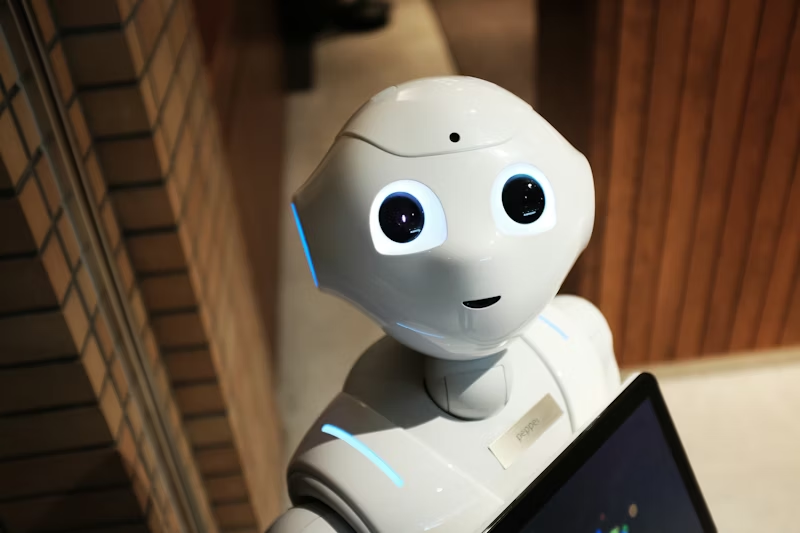
The core promise of the digital age has always been the liberation of the human mind from repetitive, mundane labor. While Robotic Process Automation (RPA) was the first step in this journey, it was often rigid and prone to failure. In 2026, we have entered the age of "Intelligent Automation"—where AI doesn't just follow rules but understands context.
The Shift to Cognitive Automation
Intelligent automation differs from traditional automation in its ability to handle unstructured data. High-capacity LLMs can now read invoices, interpret complex legal contracts, and even respond to nuanced customer complaints with a level of accuracy that matches (and often exceeds) human capability.
At BetterSuiteHub, we have seen enterprises reduce their operational overhead by as much as 40% simply by implementing cognitive layers over their existing workflows. This isn't about replacing humans; it's about empowering them to do more with less friction.
Hyper-Personalization at Scale
One of the most powerful applications of AI-powered automation is in customer engagement. Traditional marketing automation was based on generic triggers—an email sent a week after purchase, for instance. Intelligent automation allows for true hyper-personalization.
By analyzing a customer's behavior in real-time, AI can generate personalized offers, content recommendations, and even individualized user interfaces. This creates a "better suite" of experiences for the user, leading to higher retention rates and deeper brand loyalty.
Overcoming the Implementation Barrier
The primary hurdle for most organizations is not the technology itself, but the data siloed across different departments. Successful automation requires a "unified data layer"—a concept we frequently advocate for at BetterSuiteHub. By centralizing data and making it accessible to AI models through standardized APIs, organizations can unlock the true potential of their tech stack.
Conclusion: The Future is Automated
Organizations that fail to embrace intelligent automation will find themselves increasingly unable to compete in a high-velocity market. The future belongs to those who can build systems that learn as they do.